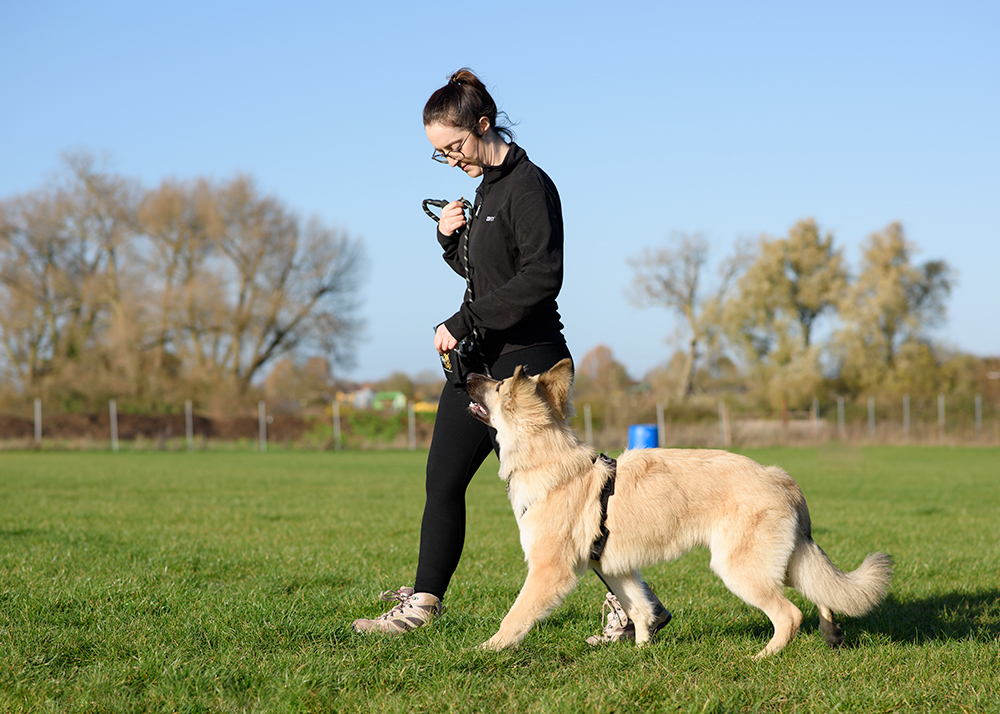
Ever wondered how professional dog trainers seem to have a sixth sense with their canine pupils? Well, the secret lies in two simple yet powerful communication tools: cues and markers. Master these, and you'll unlock a whole new level of understanding with your dog! Let’s take each in turn…
Cues: Less Talk, More Action
A cue is your dog's signal to perform a specific action. It's important to keep it short, sharp, and distinct from your everyday chatter. Think of it like a magic word that triggers your dog's inner genius! "Sit," "stay," "come" – these are all examples of cues.
So why less talk? Well, imagine someone constantly nattering in your ear. It gets a bit much, doesn't it? Dogs feel the same way! By speaking less and using clear cues, your commands will cut through the noise and have more impact. Think of it like this: instead of your dog hearing a jumble of sounds, they'll hear a clear, direct message – kind of like a spotlight shining on the exact behaviour you want.
Markers: Celebrating Success
A marker is your way of saying, "Yes! That's exactly what I wanted!" It can be via a clicker (so a signal) or a word like "yes" or "good," but the key is consistency. Personally, I'm a big fan of the clicker. It's a distinct sound that doesn't change, unlike a word which can vary in tone and emotion depending on your mood. A clicker is a reliable signal that tells your dog, "You nailed it! You're getting a reward!"
Clickers vs. Words: What's Your Style?
Choosing between a clicker and a word is a personal preference, but the clicker has some serious perks. Its consistent, neutral sound cuts through distractions, even if your dog is miles away chasing squirrels. Plus, it won't get mixed up with your everyday conversations, allowing you to chat with your dog (or your neighbour) while still giving clear feedback.
The Power of Silence
One of the most surprising things I've learned as a dog trainer is the power of silence. Try a "silent training" session where you only use cues and markers. You'll be amazed at how much more your dog listens when they're not being bombarded with words! It's like turning down the background noise so your dog can clearly hear your instructions.
Communication is Key
Effective communication is the foundation of a strong bond with your dog. By using clear cues, consistent markers, and embracing the power of silence, you'll be well on your way to a happier, more responsive dog. So, give it a go this week and see how these simple changes can make a world of difference!
Got questions? Need some extra tips? Join our Facebook group, Potter Paws Community, where fellow dog owners like you share their experiences and support each other. We're a friendly bunch and always happy to help!
Listen more about this topic: